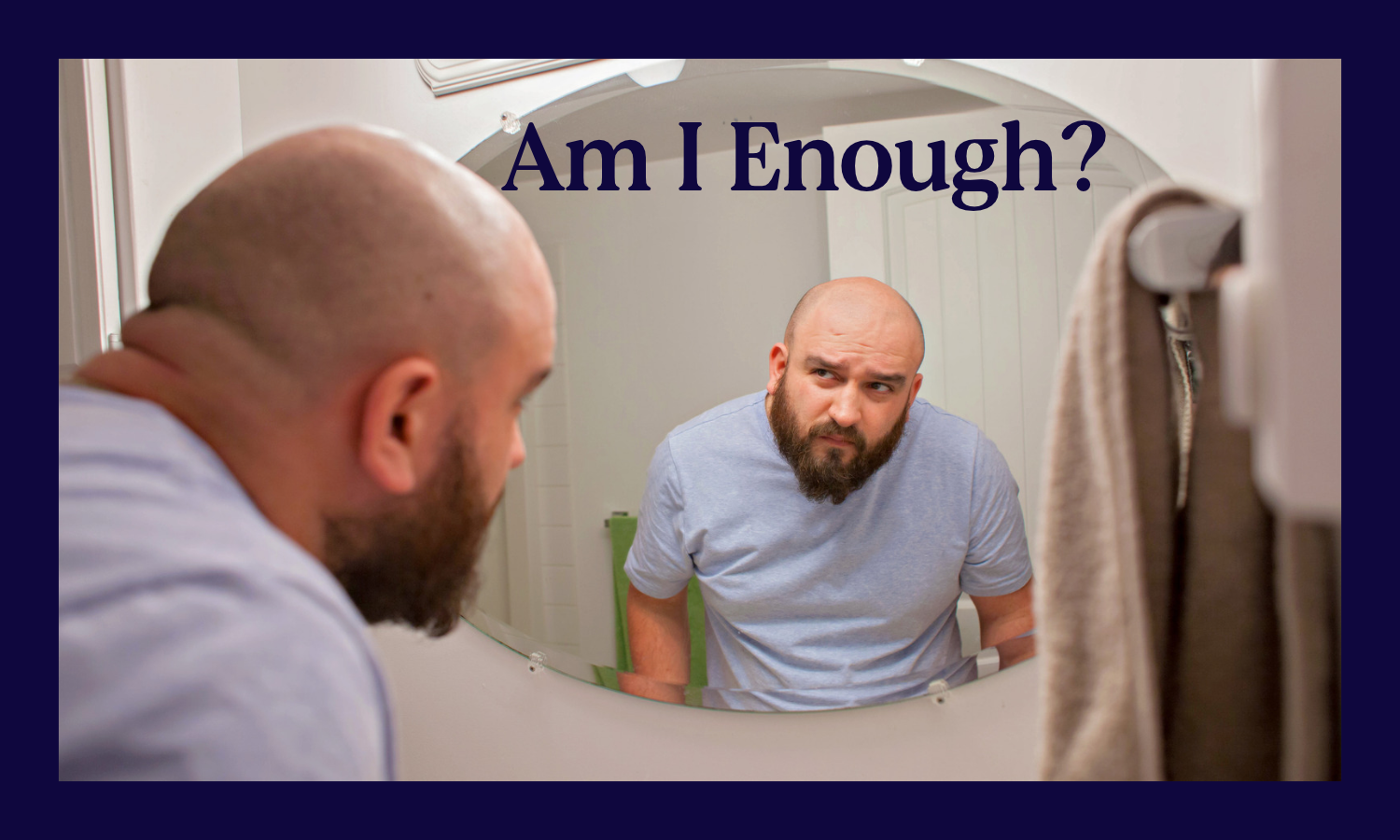
The Feeling That You’re Falling Short
Have you ever looked at your life and wondered whether you’re doing enough? Maybe you question whether you’re a good enough partner, father, friend, employee, or son. You might look around at other men and feel like they have things figured out while you’re still trying to find your footing. Even when things are going well, you may struggle to shake the feeling that you should be doing more, achieving more, or somehow being better than you are right now.
Self-doubt can be difficult to talk about, particularly for men who have learned to measure their worth by what they accomplish, what they provide, or how well they handle life’s challenges. You might be comfortable talking about your work, your responsibilities, or the things you need to fix, but less comfortable admitting that you sometimes question your own value. Perhaps you tell yourself to stop complaining, work harder, or get over it. While these responses might help you push through a difficult day, they don’t necessarily address the underlying feeling that you aren’t good enough.
Where Does the Feeling Come From?
For many men, the belief that they aren’t good enough develops gradually. It can come from growing up in an environment where praise was tied to achievement, where mistakes were met with criticism, or where showing vulnerability wasn’t encouraged. You may have learned that being a good man meant being strong, capable, successful, and dependable. There is nothing wrong with wanting to develop these qualities. The difficulty arises when you begin to believe that you must consistently demonstrate them to deserve respect, connection, or acceptance.
Life experiences can reinforce these beliefs. A relationship breakdown, job loss, financial struggle, or mistake you regret might leave you questioning your abilities or character. You might find yourself replaying conversations, dwelling on past decisions, or anticipating future failures. Over time, a particular experience can become a broader conclusion about who you are. Instead of thinking, “I made a mistake,” you begin thinking, “I’m a failure.” Instead of recognizing that you’re struggling in one area of life, you start believing that you’re falling short in every area.
The problem is that these beliefs can become so familiar that you stop questioning whether they’re accurate. You simply accept them as the truth about yourself.
You Don’t Have to Prove Your Worth
One of the challenges of struggling with self-doubt is that it can feel like you’re constantly trying to earn your place in the world. You may work harder to impress your boss, take on extra responsibilities at home, or push yourself to meet expectations that nobody asked you to meet. You might avoid trying something new because you don’t want to look inexperienced or withdraw from relationships because you’re worried that someone will eventually discover your shortcomings.
Sometimes, these behaviours are driven by a genuine desire to improve. Other times, they’re attempts to quiet the uncomfortable feeling that you’re somehow not enough. The trouble is that accomplishments often provide only temporary relief. You reach a goal, feel good for a while, and then move the finish line. There’s another promotion to pursue, another problem to solve, or another standard to meet before you can finally feel satisfied with yourself.
What if your worth didn’t have to depend on getting everything right? What if you could acknowledge your mistakes without deciding they define you? Being a good partner doesn’t mean you’ll always know what to say. Being a good father doesn’t mean you’ll never lose your patience. Being a good man doesn’t mean you’ll never feel afraid, uncertain, or overwhelmed. You can take responsibility for your actions and work toward change without treating every shortcoming as evidence that you’re inadequate.
Building Confidence
It’s easy to think that confident men simply don’t struggle with self-doubt, but confidence isn’t the absence of uncertainty. It’s the ability to move forward, make decisions, and face challenges even when you’re not entirely sure of yourself.
Building confidence often begins with paying attention to how you speak to yourself. Consider what happens when you make a mistake. Do you tell yourself that you’re learning, or do you immediately criticize yourself for not knowing better? When something goes wrong, do you look at the circumstances and consider what you can change, or do you assume that you’ve failed because you’re not capable enough?
Try noticing the difference between what happened and what you tell yourself it means. If you struggle with a difficult conversation, for example, you might conclude that you’re terrible at relationships. A more balanced response would be to recognize that the conversation was difficult and consider what you might do differently next time. The second response doesn’t ignore the problem. It simply leaves room for growth instead of turning one experience into a judgment about your entire character.
You can also build confidence by taking small, meaningful actions rather than waiting until you feel ready. Speak up when something matters to you. Try the activity you’ve been putting off. Ask for help when you need it. Make time for relationships that are important to you. Each time you act despite uncertainty, you give yourself an opportunity to learn that you can handle more than your self-doubt might suggest.
You Don’t Have to Figure It Out Alone
Sometimes, the feeling of not being good enough becomes so persistent that it affects your relationships, work, motivation, or ability to enjoy life. You might find yourself constantly comparing your life to others, seeking reassurance, avoiding opportunities, or feeling like you’re letting people down even when they tell you otherwise. You may know, logically, that you’re being too hard on yourself, but still struggle to change how you feel.
This can be a difficult experience to share with other people, especially if you’re used to being the one others depend on. You might worry that talking about your insecurities will make you appear weak or that people will think less of you. But being honest about your struggles isn’t the same as giving up responsibility for your life. In fact, understanding what’s driving your self-doubt can be an important step toward making meaningful changes.
Talking with someone you trust can help you gain a different perspective on the expectations you place on yourself. Working with a psychotherapist can also provide space to explore where these beliefs came from, how they influence your decisions, and what it might look like to develop a more balanced view of yourself. You don’t need to wait until things fall apart to seek support.
A Different Question
You may still have goals you want to reach, habits you’d like to change, or parts of your life that aren’t where you want them to be. That’s okay. Recognizing your worth doesn’t mean pretending everything is fine or abandoning the desire to grow. It means understanding that you can work toward a better future without treating the person you are today as a disappointment.
So, if you’ve been carrying around the feeling that you’re not good enough, consider asking yourself a different question. Instead of asking, “What do I need to do to finally be good enough?” try asking, “What would I do differently if I didn’t have to prove my worth?”
Maybe you’d take a risk, be more honest with someone you care about, or give yourself permission to rest without feeling guilty. Maybe you’d stop comparing your progress to someone else’s and start paying attention to what matters to you. These changes might not happen overnight, but they can begin with a simple recognition: you can be a work in progress without being a disappointment.
You don’t have to be the strongest, most successful, or most capable man in the room to have value. You don’t have to earn the right to make mistakes, ask for help, or be treated with respect. You can take responsibility for who you are and who you want to become while learning to treat yourself with the same patience and understanding you would offer someone else.
Perhaps that’s a good place to start: not with proving that you’re good enough, but with allowing yourself to believe that your worth was never something you had to prove in the first place.