Love: Beyond Avoiding Failure
As a psychotherapist who works with men, I hear a familiar story: “I’m trying to do everything right, but it still feels wrong.” Many men were never taught how to love in a full, expansive sense. Instead, they were taught how to avoid failure: don’t mess it up, don’t get left, don’t look weak, don’t lose what you’ve earned. Love becomes something to manage or protect, rather than something to experience, practice, and grow. When love is framed this way, it’s no wonder it feels anxious, fragile, and exhausting.
Love: More than the Physical
We also tend to narrow love down to romantic or sexual connection, as if eros is the whole picture. But love shows up in many forms: philia (friendship), storge (familial love), agape (care and compassion), and even love of purpose, craft, or community. Many men are quietly starved of these other forms. They may have deep loyalty to providing, but very few spaces where they are emotionally known. When romantic love is the only place where tenderness, reassurance, and vulnerability are allowed, it starts carrying more weight than it was ever meant to hold.
Love: Not an Unhealthy Dependence
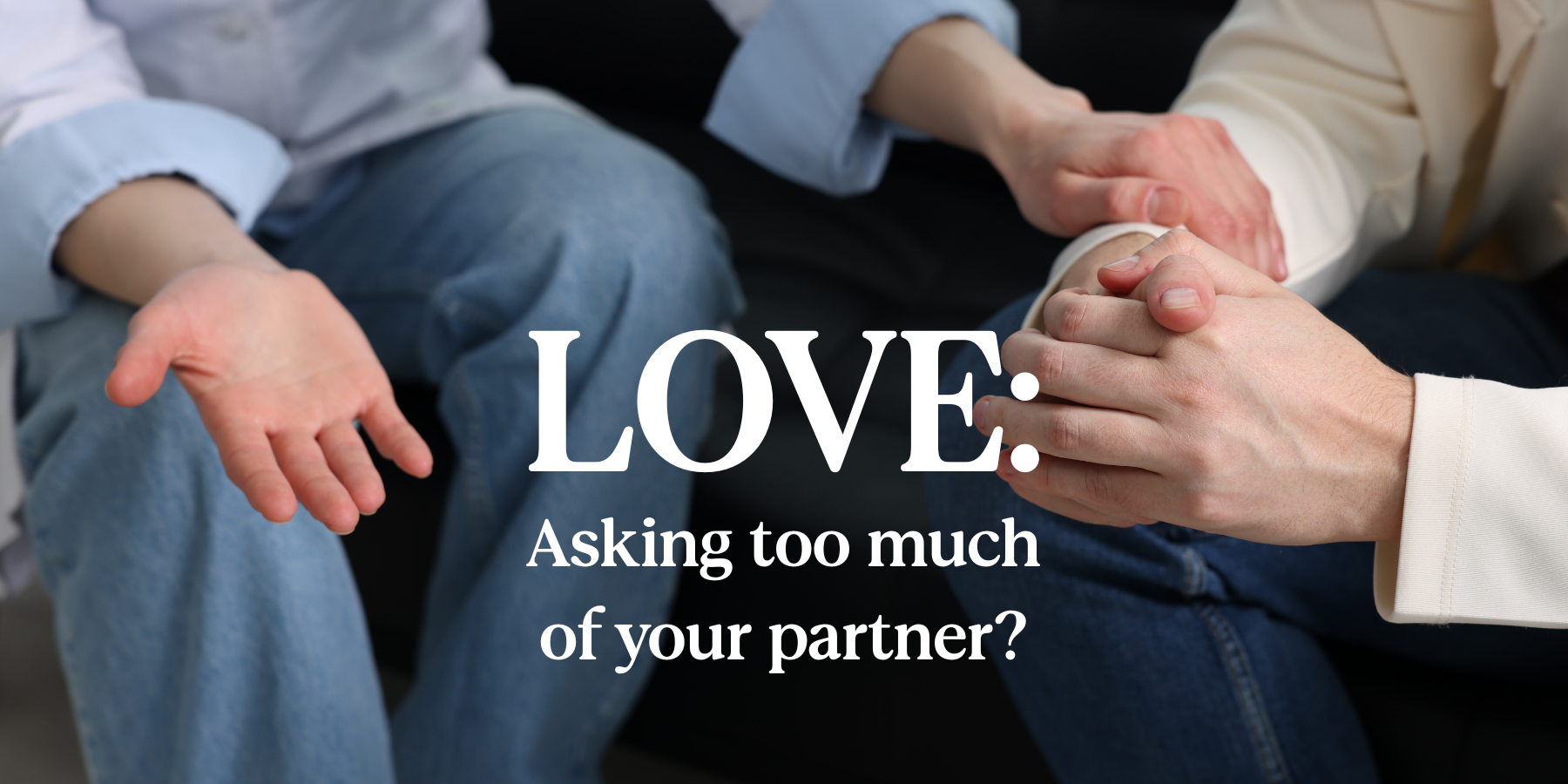
This is where relationships can become unbalanced. I often see men relying almost exclusively on their partners for emotional regulation, validation, and connection. A partner becomes the therapist, best friend, emotional anchor, and source of meaning all at once. That kind of dependence is often a reflection of how little emotional support men are taught to build elsewhere. But over time, it can strain a relationship. Love turns into pressure. Closeness turns into fear of abandonment. The relationship becomes less about sharing life and more about surviving it together.
Love: A Multiplicity of Sources
Healthy love isn’t about outsourcing your inner world to one person. It’s about learning how to be in relationship with yourself and with others in multiple ways. That might mean cultivating friendships where you talk about more than surface-level things, reconnecting with family differently, or finding communities where you’re valued beyond what you produce. It also means learning emotional skills many men were never taught such as naming feelings, tolerating discomfort, asking for support without shame, and offering care without keeping score.
Love: A Growing Emotional Maturity
Love doesn’t have to be a constant effort to avoid loss. It can be a practice of presence, mutuality, and growth, and it’s not fair to rest entirely on your partner’s shoulders. Learning how to love, in its many forms, isn’t a sign of weakness. It’s a sign of emotional maturity. It’s never too late to learn and grow.